Categories
Fine Dining Japanese

Kuon Omakase – Sydney NSW Restaurant Review

It takes good planning, a childhood spent spamming clicks into party quests in MapleStory, and a generous helping of luck to secure a spot at Kuon Omakase, one of Sydney’s newest and at $200, most expensive omakase restaurants. With only two seatings of eight per night, it is an experience so exclusive that multiple senior medical colleagues expressed their dismay at not being to secure a visit for themselves in the weeks leading up to our visit. One of these colleagues even offered to pay a 40% premium to buy one of our seats. Essentially it is Japanese Dorsia.

Executive Chef Hideaki Fukada started the night by introducing us to his lobster friend, who would soon be taken into the back room and slaughtered to produce our first dish of the night: Ise Ebi Sashimi (live lobster) with toro and caviar. Premedicated with loratadine and with adrenaline in pocket, I dug into the sweet, fresh flesh of the lobster, the delicious fatty umami of the tuna belly, and the actually pretty-soft saltiness of the osetra caviar. This was, overall, a good dish to start – even if I was extremely nervous about having an allergic reaction with the first bite of a $240 meal.

Second on the menu were Aomori Hotate, sauteed scallops with butter garlic soy sauce from the Aomori region, on the northernmost part of Honshu. These were lightly flavoured, slightly tougher than I expected, and really didn’t do anything special for me. In fact, they got me a bit worried about the meal to come.

The Traditional Chawanmushi, an egg custard with fish cake, chicken, scallop, prawn, and gingko nut was next – a warm bowl of subtly flavoured goodness. The egg custard was soft and silky, and I felt like I could eat bowls and bowls of it on its own. As for the embedded proteins, the prawn was large and sweet, but unfortunately there is nothing much more to say about the chicken, scallop, or fish cake.

The kusakari tsubodai tatsuta age, fried armorhead served with a slice of okra and a slice of lemon, was really also just fine – though it doesn’t look like armorhead is a commonly eaten fish. The subtle layer of batter helped to seal in the fish’s moisture and sweetness, though at the end of the day this dish didn’t feel much more elevated than any other battered and deep fried fish that I’ve had in my life.

The uni tempura wrapped in shisho leaf was a $20 supplement and one of the best morsels of the night. The Hokkaido sea urchin was plump and creamy, with not even a hint of bitterness. The warmth added to the sea urchin through the tempura process helped make an already melty snack creamier than I could have even imagined. A must get add-on.

This giant abalone was flashed before our eyes five minutes before our next course. This is apparently the amount of time it takes to slice, dice, steam, sauce, and plate abalone.

The steamed abalone in Saikyo miso sauce was generally poorly receieved among our party. Though we appreciated the theatre of seeing the entire abalone, the complex, slightly bitter sauce was certainly very divisive. While I didn’t hate the sauce, I also didn’t really feel like this was anything above and beyond what you’d get in a standard Chinese seafood restaurant.

The Wagyu dish, a full blood MB9+ wagyu strip loin with optional foie gras ($20 supplement), was divine. The juicy meltiness of the beef paired perfectly with the rich umami of the foie gras and the semi-sweet berry sauce. Each bite of this was treasured, though I think it would’ve been just as good without the foie gras.

A fresh yuzu sorbet was offered as our meal transitioned into the nigiri zone.

Executive Chef and Owner Hideaki Fukada, caught in a non-photogenic moment, displaying his box of treasures.

The ten-piece nigiri omakase was overall an excellent journey through the Sydney Fish Markets’ best buys of the day. While it makes for a very poor food blog reading and writing experience for me to not know what exactly each piece was, our friendly chefs also did not make a huge effort to tell us. One tiny bone I have to pick is that the chef made a point to tell us that particular bites cost him $200/kg from the supply side. As a group each paying $240 for much less than a kilogram of fish, it felt like these pricings almost cheapend the experience.

Our selection was essentially an assortment of cuttlefish, o-toro, chu-toro, cuttlefish, calamari, prawn, marinated akami, imperator, tamago, and this most fabulous piece of rich and umami fatty tuna neck that I’ve chosen as the highlight photo. Each bite was a delight, but this piece really took the cake as something special to remember.

Back to our regular programming, this lobster miso soup was delicious and warming. Unfortunately no tools were supplied with which to eat the our lobster friend’s meat, and while I can infer from this that it wasn’t meant to be eaten, this didn’t stop us from trying.

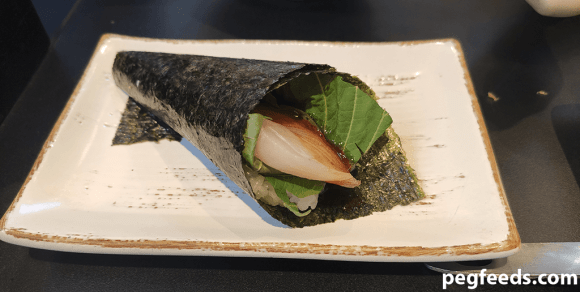
The star of the night and Chef Fukada’s specialty is this amazing temaki of uni, toro, and ikura. Essentially my three favourite sea products into one, each bite of this hand roll was bursting with oceanic umami flavours. Absoutely amazing.

A hot cup of matcha green tea signified the end of our main course, and the beginning of dessert.

Our dessert was a matcha white chocolate mousse, topped with boba with a side of sliced strawberry. Small and delicate, like the rest of our meal.

VERDICT
Kuon, by virtue of its exclusivity and unparalleled price-tier, is difficult to consider objectively. Most of the food, especially the bits that involved sea urchin or tuna belly, was certainly very good, however there were still some misses, not just for me, but also for the rest of our group. Comparing it to other Sydney fine dining establishments in this top-tier price range, I’d definitely consider Kuon ($240) to shoot above Quay ($290), and probably also Tetsuya’s ($250). Comparing it to other omakase experiences I’ve had in Sydney, however, I’m not sure that I can definitely say that our meal was worth three times that of our also-excellent omakase experience at Yachiyo ($80). That said, it’s probably the uni-toro-ikura hand roll, and the fact that my partner missed out (dutifully doing a locum in Victoria), that means I’ll probably be back at Kuon in due time.

Kuon Omakase
Shop 20/2-58 Little Hay St, Sydney NSW 2000
0488 688 252

Categories
Japanese Korean

Kumiho – Parramatta NSW Restaurant Review

PROLOGUE
Picture this. It’s my 26th birthday, just about to cap off two years of living and working in Western Sydney. One of the shining highlights of the Deep West has been Kumiho, a small and casual Korean-Japanese restaurant that I had only eaten at once but at which I had savoured each bite. It might not be my girlfriend’s favourite Japanese restaurant in the area (that prize would go to Touka), but it is mien. I ask my girlfriend if we can go. She says no. We order some pizza instead.

It was twelve months later, after a year in the Eastern Suburbs tasting everything that the Inner West and CBD had to offer, that we found ourselves back in Parramatta, looking at apartments and planning our move back to the West. My partner, after some incessant nagging, finally agreed to let me go back to Kumiho and let me tell you – even after all of the Japanese food I’ve had this year, Kumiho is still among the best I’ve ever had.

GENERAL COMMENTS
Kumiho is a mixed Korean and Japanese restaurant, providing authentic East Asian cuisine in a relaxed bar and restaurant setting. While it is part of the same group of restaurants as Sushi Hotaru, Wagaya, and Lantern, each venue offers a distinct dining experience – Kumiho being my favourite. Ordering is via tablet located at each table, a signature trait of these restaurants and helpful for those times when you just don’t want to interact with anyone. Service is fast, though it seems that the restaurant only has two jugs of water to share between all of its patrons, and as such you may be waiting for a long time for your water to be refilled. (No doubt at least in part to encourage you to buy drinks).

DISH BY DISH DIVE

The Tuna Tataki ($15) is brilliant. The outside edges are perfectly seared, with the inside retaining its sashimi quality. The tuna is fresh, high quality maguro, and the sauces complimented the flavour of the fish without overpowering it. Much better than the mess of failures in the seared tuna at COOH in Alexandria – a meal I’m still salty about.

The Unagi (Eel) Tempura ($9.20) was freshly fried, light and crispy. Each bite was filled with delicious umami flavours, and though it was smothered mayonnaise and tempura sauce I didn’t find it to be too overflavoured.

The Wagyu Bulgogi Hot Pot ($17) was quite good, and well priced for the size. My one complaint is that while I’m sure it was wagyu as advertised, I don’t think the fact that it was wagyu really added anything to the dish – the meat was not marbled at all.

The white fish with Korean miso handroll ($3.20) was a handroll of mystery fish and sesame leaf. The size was good for the price, but I don’t think either of us really enjoyed the unnamed white fish. Despite this, the rice and seaweed were of good quality. It’s a shame, though, and I think I’d still like to try some of their other handrolls.

The salmon belly nigiri ($2.50 per piece) was only slightly more expensive than the vanilla salmon nigiri, and well worth the upgrade. The salmon belly, complete with invisible flavour cuts, had a great texture and rich flavour. The kingfish belly nigiri ($3 per piece) was good, but unfortunately overshadowed by the salmon belly which provided a more special mouthfeel at a cheaper price (though it’s always good to have variety).

The Chicken Paitan Cloudy Ramen ($16.80) is an unfortunately weak temporary addition to Kumiho’s menu. Offered as part of a trial promotion, the ramen didn’t have much flavour other than salt and pepper. The pieces of chicken, whilst immersed in fluid, were paradoxically dry, and I hope this doesn’t become a permanent fixture on Kumiho’s otherwise good menu.

The Seafood Bowl with Miso Soup ($17) is an excellent chirashi don style deal with an assortment of sashimi (salmon, kingfish, and tuna) atop a bed of sushi rice and topped with some soy and chopped shallots. The pieces of fish were very generous in size and the ratio of fish to rice was on point. The miso soup was a warming and wholesome bonus to an already great bowl. A strong recommendation from me.

Both the Wagyu Skewer ($6) and Pork Belly Skewers ($4) were quite good and much better priced than most other restaurants. The beef was thick cut, not tiny peasant pieces at exorbitant rates as seen at places like Fugetsu and, oddly enough, Kumiho’s sister restaurant Lantern. The pork was thick and juicy, and the supplied white miso dipping sauce added a nice touch of umami. Both were good buys, though the pork was a bit better.

I quite liked the vegetable tempura ($11). Unlike most tempura dishes I’ve had in recent times, Kumiho’s tempura doesn’t take the easy way out by frying a bunch of root vegetables. Instead, Kumiho’s vegetable tempura features 2 pieces each of red capsicum, green capsicum, shittake mushroom, and carrot – a refreshing change, and a great selection of less-starchy vegetables.

The truffle kingfish sashimi ($15) is an experimental dish similar in vein to the tuna tartare, with diced sashimi kingfish, diced avocado, fried garnish, crispy seaweed, and truffled sauce in a large bowl. Whilst my partner liked the truffle flavours and thought that this was the rare dish in which truffle wasn’t just for added for show, I didn’t really like this as much as I did the tuna tartare reviewed above. It just felt a bit plain.

The aburi salmon nigiri (5 pieces for $11) features large, slightly thicker pieces of salmon with minimal sauce. They were great, especially considering that many restaurants make the mistake of drowning their aburi salmon in mayonnaise and tare.

The Korean pork bossam ($15) is a well priced and portioned plate, featuring pieces of fatty and lean pork, kimchi, cabbage, and shiso leaf for wrapping. The salad elements were fresh, and the meat generally well cooked, with the exception of some of the smaller morsels of pork which were a bit dry and overcooked. It is, however, overall a passing dish.

EPILOGUE
Kumiho provides great tasting Japanese and Korean food at a great price, with quality comparable to or exceeding its competitors in the Parramatta region. Keep your eyes peeled on this page as it gets updated throughout the year. I’m going to be living 3 kilometres away for the next twelve months. I’ll be sure to go back again and again.

5 tails / 1 fox

Kumiho
140 Marsden St, Parramatta NSW 2150
(02) 8872 5070

Categories
Japanese

Kibuna – Mascot NSW Japanese Restaurant Review

Look. This is a difficult one. I’ve been to Kibuna numerous times since I’ve moved to the area. Some of their food hit well, some of them miss.

I’m a stan for their Okayama crumbed oyster. (not pictured). It is a must get.

Their soft shell crab roll is only ok.

The spicy teriyaki chicken don got me through a night shift once, it was the only thing to live for at the time, but it was not perfect.

I once had ox tongue that I thought was ox tail (what a surprise).

The swordfish collar was a daily special and a bit fishy for me.

Their ramen (not pictured) is a bit forgettable. I’ve had their pork negi chashu ramen, chicken yokozuna ramen, and their pork spicy tantan ramen and none really wowed me.

Overall a good place and I will be eating here again, hopefully eating in rather taking away. Skip the gyoza.

4/5

Kibuna
1123 Botany Rd, Mascot NSW 2020
(02) 8338 8688

Categories
Japanese

Kuki Tanuki – Erskineville NSW Japanese Restaurant Review

Intrigued by the promise of aburi scallop and steam sake fish, we drove to and parked in Erskineville to eat at Kuki Tanuki. Unfortunately when we arrived we encountered a menu significantly different to what was posted online on Zomato (no doubt we had seen an old one). This is our story.

Wagyu Beef Bowl ($25) – The wagyu beef bowl was the most expensive dish that we tried. It was a large bowl of rice topped with seared beef and a low temperature egg. I personally found the beef to be very raw, and did not think it was seared enough. Chewing on the raw beef I could really imagine the life that Daisy had led in the fields and under the sun. The beef was so raw that I could still taste some of her emotions. My partner did not find the beef so raw as it was difficult to see in the lighting just how raw it was. I did however really enjoy the egg and how it mixed into the rice. I wonder if these guys could take some inspiration from bowlsoc, and their illustrious leader the Meat Master.

Chicken Yakitori with tare (3 for $9). I really enjoyed the yakitori. My partner often confuses yakitori and yakiniku and doesn’t let me eat it very often. One of the negative aspects of the yakitori and I guess the meal was that all of the dishes were served concurrently. The yakitori therefore had time to rest on the counter while waiting for the cow to be slaughtered and put directly onto the rice. In doing so, the yakitori cooled down and ended up a bit lukewarm by time of eating.

The sashimi nachos ($13) were a lot more deconstructed than I had anticipated. In my short lifetime all nachos I have had have had the tortilla chips mixed into the salsa/dip. In this case we were served discrete tortilla chips and a bowl of sashimi and salsa mix and given no instruction. Using my keen sense of innovatoin and drawing on my past experience I was able to scoop some of the nacho mix onto these chips. They were ok. The chips were crunchy. The filling was fine. I wish they had just come as tacos.

Tasmania Roll ($17). My partner is a big aburi salmon fan, and even though she was outside making an important call and I had to choose all of the dishes by myself I knew that she would like this. The Tasmania roll basically had some aburi salmon on top and avocado and cucumber in the middle. My partner quite liked it but in my humble opinion I did not like that the middle was only green. It was a field of wasted opportunity.

The Soft shell crab mini burgers (2 for $13) were good though a bit oversauced.

The Yuzu sake ($10) was expensive but very good. My partner is a big fan of sour things, and liked it so much that she asked them if she could buy some for home. The answer was no.

Overall we ended up spending $81 for a dinner for two but weren’t able to have the two things I really wanted. This makes me quite sad. We will try and come back if the scallops reappear.

Kuki Tanuki
 63 Erskineville Rd, Erskineville NSW 2043
(02) 8084 7438

Categories
Japanese

Fugetsu – Haymarket NSW Restaurant Review

I won’t bore you with all the details of our visit to Fugetsu. Instead, I will provide a few photos as well as a list of similarities and differencesin comparison to Sushi Hotaru.

Similarities
Both reasonably priced sushi trains within the same geographic region
Hand rolls are good and perhaps represent the best value
Touchscreen ordering system which negates the need for unwanted human-on-human contact
For FugetsuAgainst Fugetsu
Free parking in Market City after 6PM until the following morning, permitting other CBD baseda ctivitiesMore expensive than Hotaru – $3.95 a plate for most things and more for premium plates
A selection of alcohol, including $6 tap beer during happy hourAburi nigiri is universally drenched in mayonnaise
Wide range of non-sushi foodsNon-sushi foods experienced including the takoyaki and wagyu skewers were either not good or quite expensive
Open until later than Sushi HotaruQuality of sushi in general is probably a little lower than at Hotaru

VERDICT
I think that overall if you’re keen for a cheap but good quality sushi train meal in the Sydney CBD, Sushi Hotaru is still hard to walk past. Other factors like free parking after 6PM however are significant, and the difference in quality between the two places is small enough that saving $10 on parking may or may not sway the decision one way or another.

Fugetsu
Shop R3, 16 Level 3, Market City, 9-13 Hay St, Haymarket NSW 2000
(02) 9211 6128